

RESOURCE ● BLOG ●
RESOURCE ● BLOG ●
How to:
get comfortable on unfamiliar club gear, fast
There's a gap between the setup you practise on at home and whatever's waiting for you in the booth. You should always ask the venue to provide the equipment specs so you’re not surprised when you arrive, and do your homework! Here's the thing though — it's all the same job underneath. Every setup in the world does the same handful of things, and once you know what you're looking for, you can walk up to almost anything and find your feet quickly.
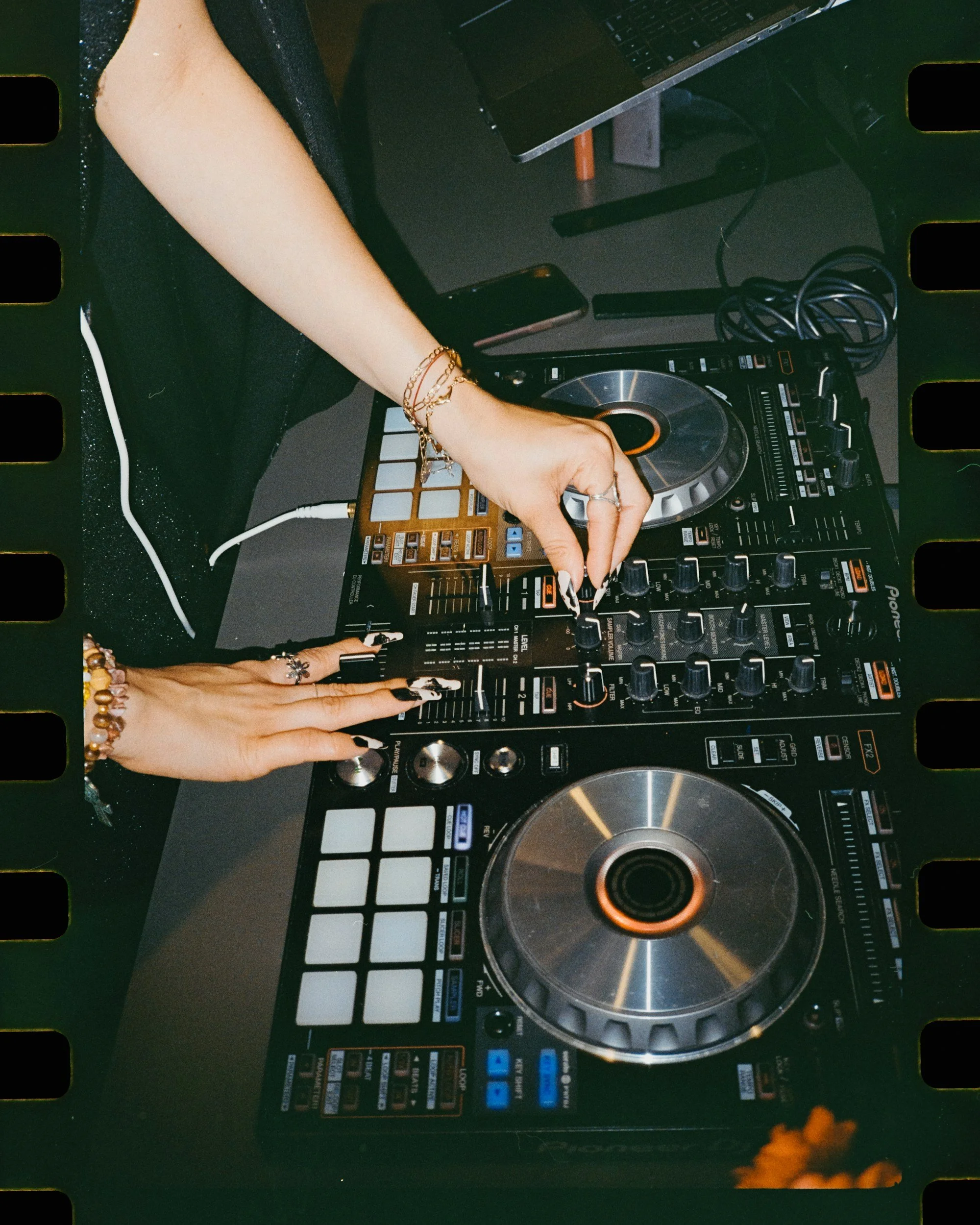
So get there early and put your hands on it before you play. Don't wait until you're live to work out where things are. Every mixer has the same essentials: channel faders, EQ for your highs, mids and lows, a trim or gain, your headphone cue, and the tempo. Find those first. Work out how tracks actually load — USB, rekordbox, CD, or streaming over Link — set your headphone cue, and check the difference between the booth monitor and the master so you're not caught out by the levels. That's your five-minute checklist and it works on anything.
It helps to know the families you'll run into, because they cover almost everything. The Pioneer standard is separate players plus a DJM mixer — that might be a pair of flagship CDJ-3000s, or more compact XDJ-700s, running into a mixer like the DJM-750MK2. They all share the same rekordbox and USB logic, so once you know one Pioneer player you know them all; the smaller units just have a tighter jog and screen.
Then you've got all-in-ones like the XDJ-XZ, which pack the players and mixer into a single unit — same thinking, tighter layout, a couple of things tucked into menus. And finally the Xone mixers, the Xone:92 and Xone:96 — analogue Allen & Heath boards that are laid out differently, have no track screens on the mixer, and are loved for their filters and EQ. If you only know a DJM, give yourself a proper minute with an Xone before you play, because the filter and send routing is where people come unstuck.
And don't be too proud to ask. The resident playing before you, the sound engineer, the promoter — they all know that booth better than you do, and every one of them would rather show you than watch it go wrong. Watch whoever's on before you go up. If something throws you mid-set, come back to the fundamentals — faders, EQ, cue — because those are the same on every setup ever made. Getting comfortable on club gear was never about memorising every unit. It's knowing the job doesn't change, and finding the five controls that matter.
THE CHECK LIST

Get to the booth early and put your hands on the gear before you play
Find the essentials first: channel faders, EQ, trim, cue and tempo
Work out how tracks load — USB, rekordbox or streaming over Link
Set your headphone cue and check the booth and master levels
Know the families: separate Pioneer players (CDJ-3000, XDJ-700) into a DJM like the DJM-750MK2, all-in-ones like the XDJ-XZ, and Xone mixers
Give yourself a minute with an analogue Xone (92 or 96) if you only know a DJM
Ask the resident or engineer anything you're unsure of, and watch the DJ before you
DID YOU KNOW?
The only real way to get comfortable on club gear is time on it — the actual CDJs, the actual mixers, no pressure. That's exactly what our Open Decks sessions are for: a proper booth to practise on so unfamiliar gear stops being unfamiliar.
Find yourself in the artist journey map and find out how to get involved!
Find
Your Path.
5 questions. A personalised map of the community projects and marketing services that are right for where you are right now — and where you want to go.
Platforming artists to pursue their music dreams.
Discover → Develop → Launch → Fly
What do you do?
How long have you been doing it?
Have you played or released publicly yet?
Is your social media set up for your music?
What's your biggest challenge right now?
Here's your path.
Subscribe to The Drop — free resources, project call outs, round up of gigs and opportunities every Wednesday.