

RESOURCE ● BLOG ●
RESOURCE ● BLOG ●
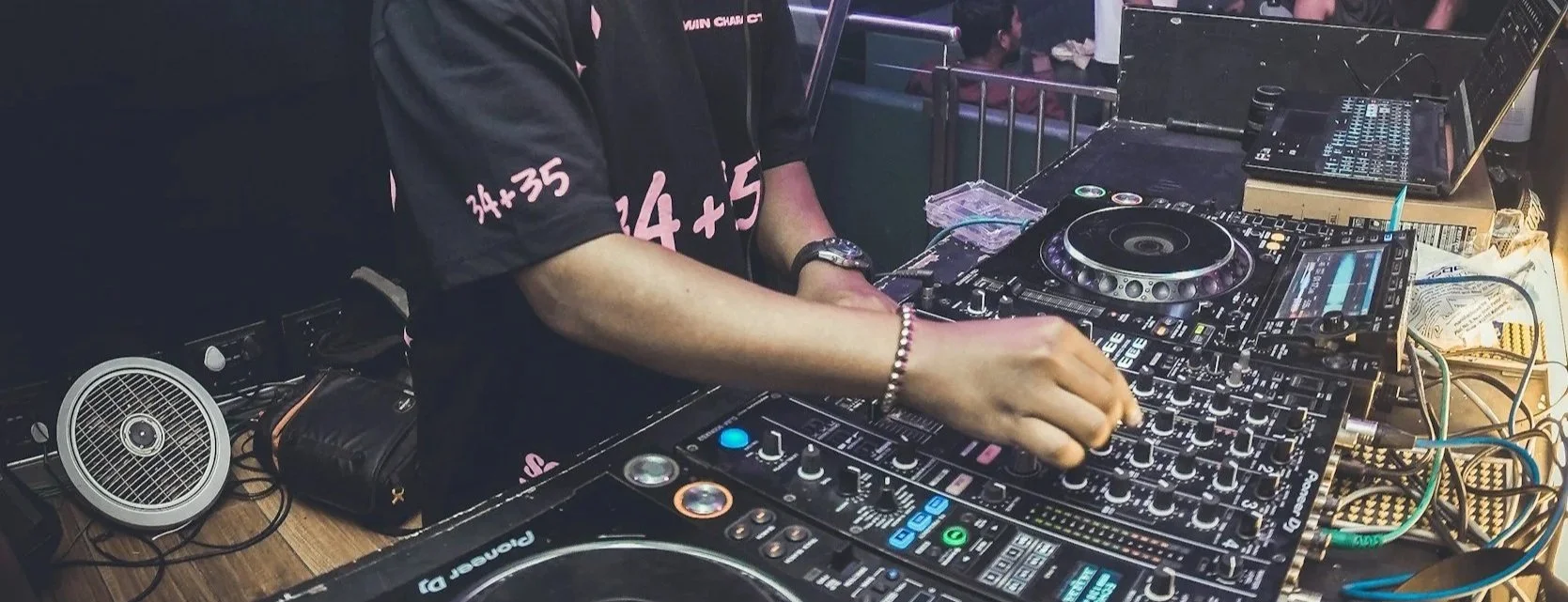
How to:
know when to beatmatch by ear vs use sync
The beat matching debate gets more heat than almost anything in DJ’ing. One camp says using sync is cheating; the other leans on it so hard they'd be lost without it. Both are missing it. Sync is a tool and beat matching by ear is a skill — and the DJs who are actually good know when to reach for each, and don't feel weird about either.
Beat matching by ear means matching two tracks' tempos and lining their beats up yourself, with the pitch fader and your ears. It's the foundational skill, and it's worth learning properly even in a sync world. It teaches you to actually hear phrasing, tempo drift and how two tracks lock together, and it saves you when you're on gear with no sync, when you're on vinyl, or when the BPM reading is wrong — which happens more than you'd think. A DJ who can only sync is stuck the moment the tech doesn't cooperate.
Sync locks the tempos together for you at the press of a button, and it's not cheating. What it actually does is free up your hands and your head for the stuff that makes a set — reading the room, working your EQs and filters, layering loops, triggering hot cues, running three decks. When you're doing something complex or performative (like balancing 3 decks, trying to get the finger drumming right on the right phrasing etc), letting sync handle the beat matching means you can focus on the creative part. Plenty of world-class DJs use it for exactly that.
So the honest answer is to use both. Reach for sync when it frees you up to be more creative, or when you're juggling too much to babysit two pitch faders — long blends, harmonic layering, multi-deck, tight FX work. Beat match by ear when the gear won't sync, when you're on vinyl, when the BPM's unreliable, or just to keep the skill sharp. The mistake was never using sync. It's never learning to do it without. Get it in your ears first so you're never dependent, then use sync as the tool it is.
The gear should serve your set, not the other way round.
THE CHECK LIST

Learn to beatmatch by ear first — it's the skill sync can't replace
Use your ears and the pitch fader to match tempo and line up the beats
Lean on ear skills when gear won't sync, on vinyl, or when the BPM data is wrong
Use sync to free your hands for EQs, filters, loops, hot cues and multi-deck
Reach for sync on complex or performative mixes where babysitting faders holds you back
Don't treat sync as cheating or as a crutch — it's a tool with a time and place
Keep your ear skills sharp so you're never dependent on the tech
DID YOU KNOW?
Beatmatching by ear only comes from doing it — badly at first, until it clicks. Our Open Decks sessions give you the booth time to build that skill on real gear, so it's second nature by the time it counts.
Find yourself in the artist journey map and find out how to get involved!
Find
Your Path.
5 questions. A personalised map of the community projects and marketing services that are right for where you are right now — and where you want to go.
Platforming artists to pursue their music dreams.
Discover → Develop → Launch → Fly
What do you do?
How long have you been doing it?
Have you played or released publicly yet?
Is your social media set up for your music?
What's your biggest challenge right now?
Here's your path.
Subscribe to The Drop — free resources, project call outs, round up of gigs and opportunities every Wednesday.