

RESOURCE ● BLOG ●
RESOURCE ● BLOG ●

How to:
mix in key: harmonic mixing and the Camelot wheel
You can beatmatch two tracks perfectly and still have them sound wrong together — a dissonant, slightly sour clash through the blend. That's almost always the keys fighting each other. Harmonic mixing, or mixing in key, is the practice of choosing tracks whose musical keys sit well together, so your transitions sound smooth and intentional rather than tense. It's not essential to being a good DJ, but once you hear it, you can't unhear it.
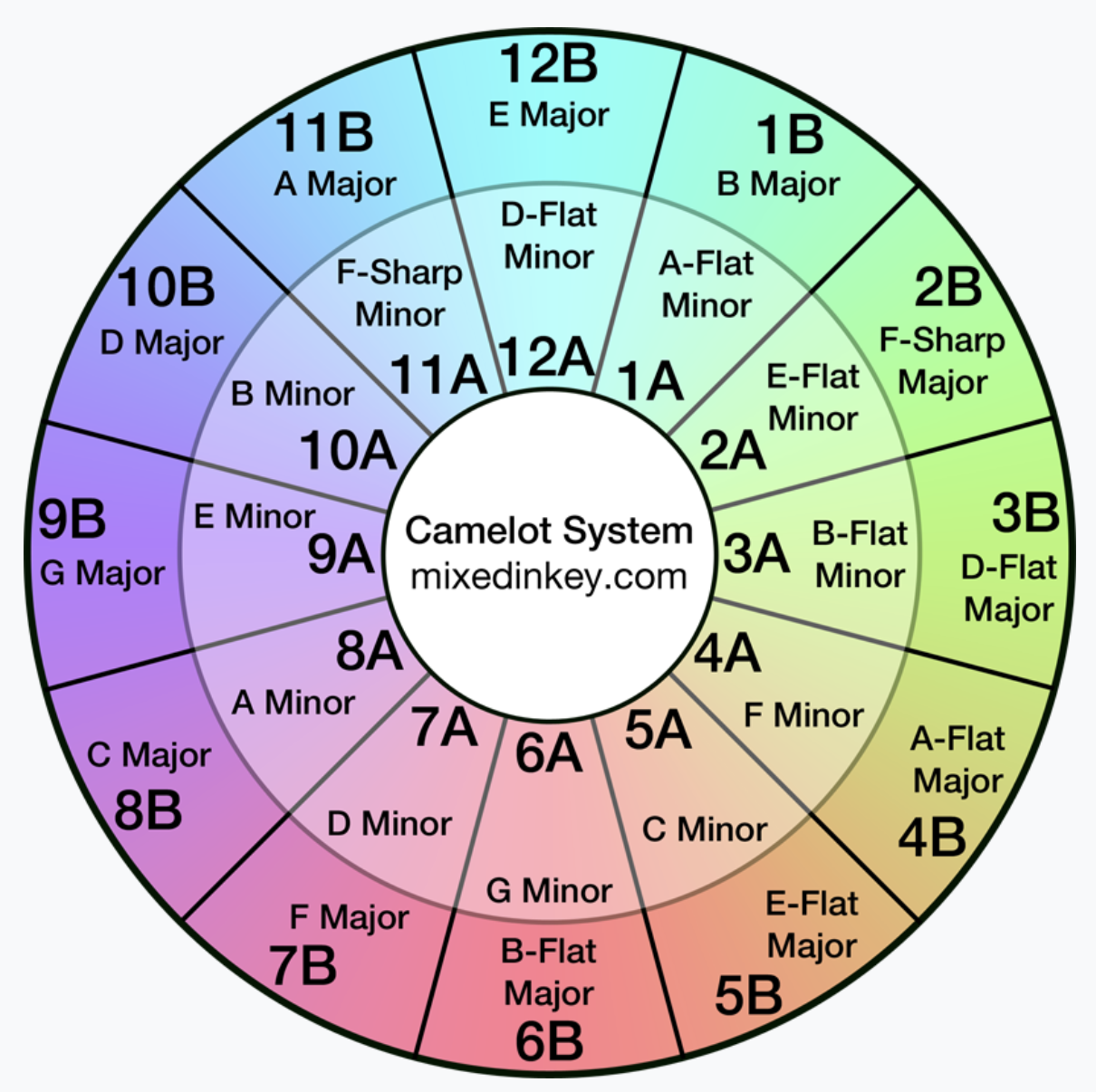
The Camelot wheel makes it simple by turning music theory into a clock you don't need to understand theory to use. Every key gets a code: a number from 1 to 12 and a letter — A for minor, B for major. Your DJ software (Rekordbox, Serato, Traktor) analyses and tags this automatically. The rule of thumb: tracks mix harmonically if they share the same code, or move one step around the wheel on the same letter (8A to 7A or 9A), or switch letter on the same number (8A to 8B, its relative major or minor). So from 8A, your smooth options are 8A, 7A, 9A and 8B.
Use it as a guide, not a cage. Staying in key keeps things silky, but stepping outside it deliberately can lift the energy or create tension you resolve later — moving up the wheel tends to raise intensity. The point isn't to follow the numbers religiously; it's to understand why some blends feel effortless and others don't, then trust your ears. Prep your library with keys tagged, and you'll always have a few harmonically safe options ready when you need them.
THE CHECK LIST

Let your DJ software analyse and tag the key of every track in your library
Learn the basics of the Camelot wheel — number plus A (minor) or B (major)
Mix to the same code, one step on the same letter, or the same number across letters
Try moving up the wheel when you want to lift the energy
Treat clashing blends as a sign the keys are fighting, not just your timing
Step outside the key deliberately for tension, not by accident
Trust your ears over the numbers — the wheel is a guide, not a rule
DID YOU KNOW?
Theory clicks fastest when you're hands-on with it. Our Open Decks sessions give you real deck time to practise harmonic blends on a proper setup, so mixing in key becomes something you feel rather than something you have to think about mid-set.
Find
Your Path.
5 questions. A personalised map of the community projects and marketing services that are right for where you are right now — and where you want to go.
Platforming artists to pursue their music dreams.
Discover → Develop → Launch → Fly
What do you do?
How long have you been doing it?
Have you played or released publicly yet?
Is your social media set up for your music?
What's your biggest challenge right now?
Here's your path.
Subscribe to The Drop — free resources, project call outs, round up of gigs and opportunities every Wednesday.